
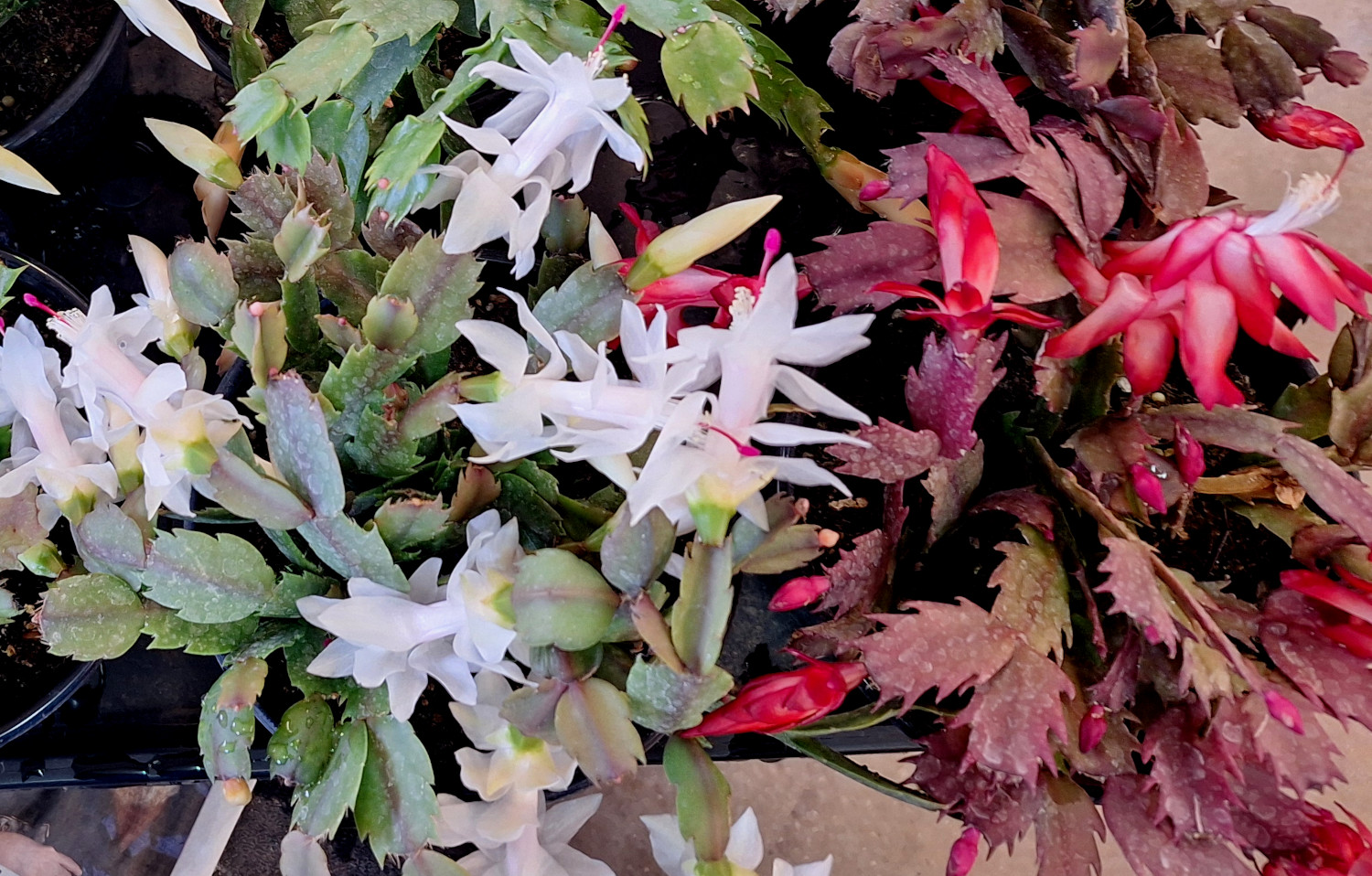
Holiday Cacti – including Thanksgiving Cactus (Schlumbergera truncata), Christmas Cactus (Schlumbergera x buckleyi), and Easter Cactus (Rhipsalidopsis gaertneri) – are popular, long-lived houseplants prized for their vibrant blooms that open around major holidays. Unlike desert cacti, these plants are epiphytes native to the humid coastal mountains of Brazil, where they grow on trees and rocks, meaning they thrive with a little extra moisture and indirect light.
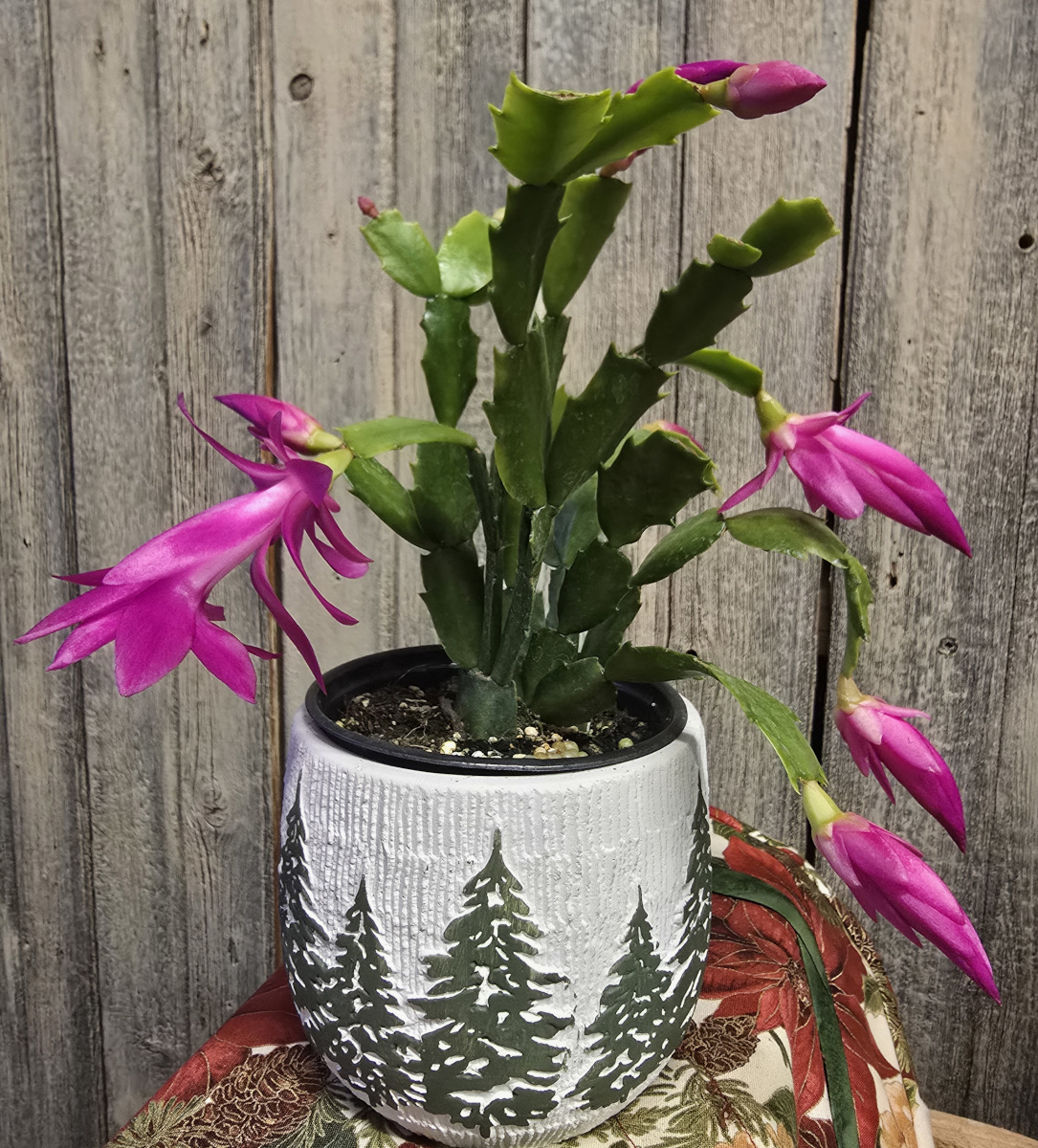
How to Tell Them Apart
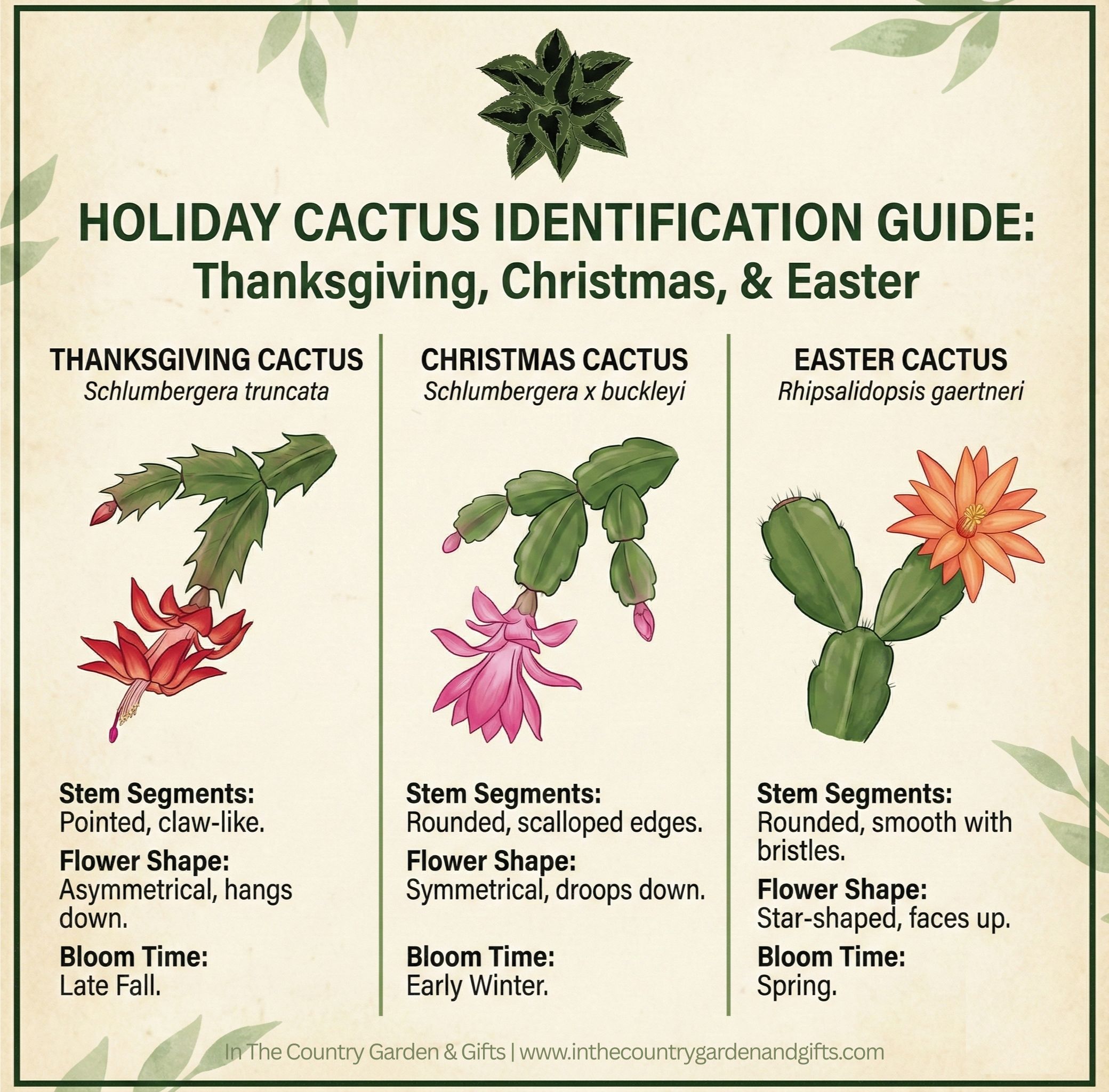
Because all three are commonly sold simply as “Holiday Cactus,” the easiest way to identify which one you have is by looking closely at the stem segments (cladodes) and flower shape:
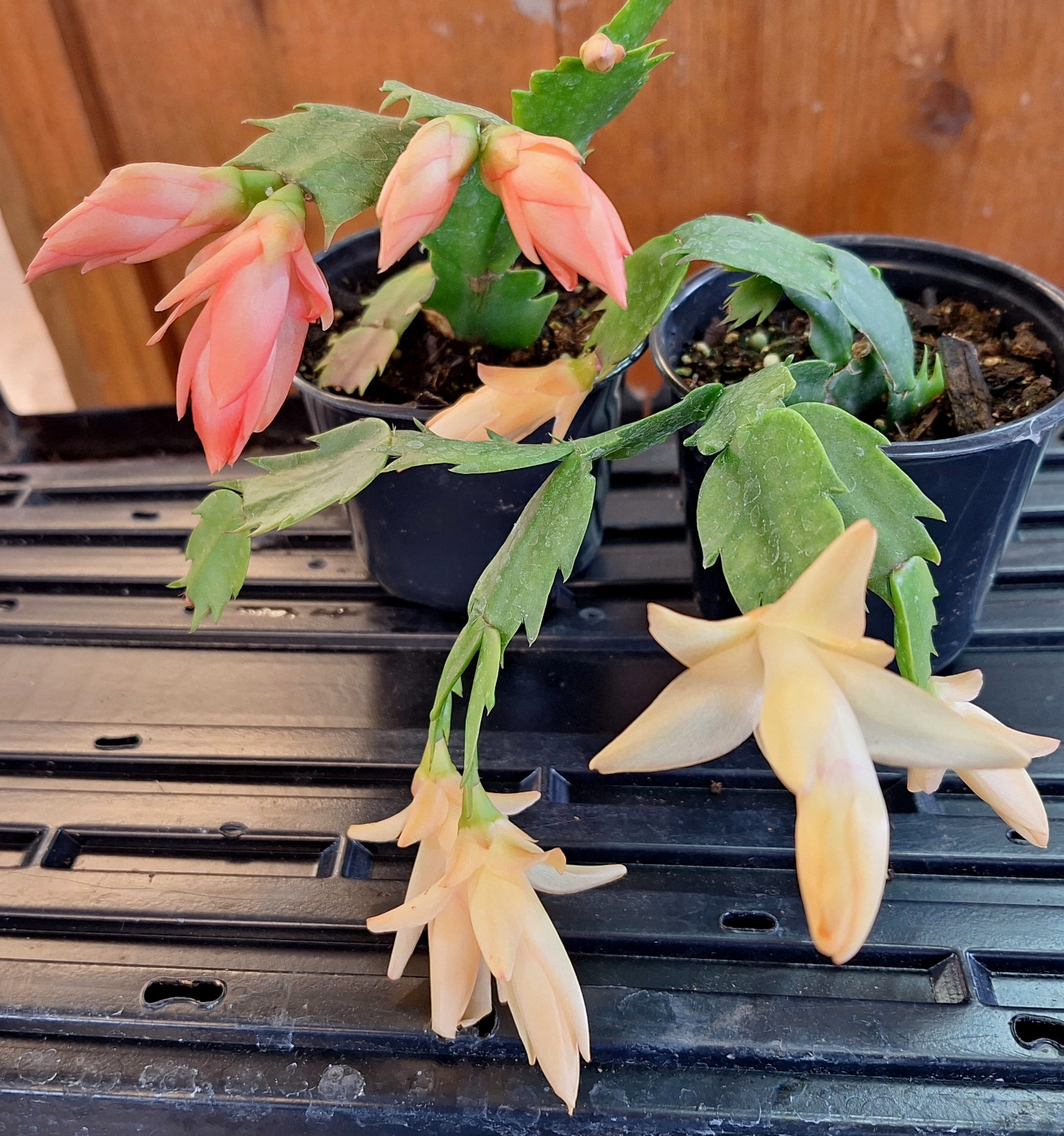
- Thanksgiving Cactus (Schlumbergera truncata)
- Stem Segments: Features distinct, pointed, claw-like projections along the edges.
- Flowers: Asymmetrical blooms that hang down from the stem tips.
- Bloom Time: Late fall.
- This is the most commonly grown Holiday Cactus.
- Christmas Cactus (Schlumbergera x buckleyi)
- Stem Segments: Smooth, rounded, and scalloped along the edges rather than sharp or pointed.
- Flowers: Symmetrical blooms that droop downward.
- Bloom Time: Early winter.
- Easter Cactus (Rhipsalidopsis gaertneri)
- Stem Segments: Rounded and smooth margins accented with tiny, hair-like bristles along the edges and tips.
- Flowers: Symmetrical, star-shaped blooms that open wide and face upward rather than drooping.
- Bloom Time: Spring.
Here at In The Country Garden & Gifts, we grow holiday cacti (usually Thanksgiving cacti) right on-site rather than bringing them in on trucks from out-of-state growers. Because holiday cacti are notoriously sensitive to sudden swings in temperature, light, and drafts once they form buds, skipping long-distance shipping prevents transit stress and dramatically reduces the frustrating bud drop that often plagues mass-produced plants. Growing them locally also means you are getting a sturdier plant ready to thrive in your home for decades.
Watering and Humidity
- Watering: Water thoroughly once the top third of the soil feels dry to the touch. Overwatering leads to stem rot, while underwatering causes segments to shrivel and drop. Scale back watering slightly during the cool fall rest period (mid-October through November) while buds are setting.
- Drainage: Always plant in a container with drainage holes and empty excess water from the saucer right away.
- Humidity: High humidity keeps stems plump and healthy. Mist occasionally, group plants together, or set the pot on a pebble tray with water resting below the bottom of the pot. While a little extra humidity is appreciated, normal home humidity will work just fine.
Light and Temperature
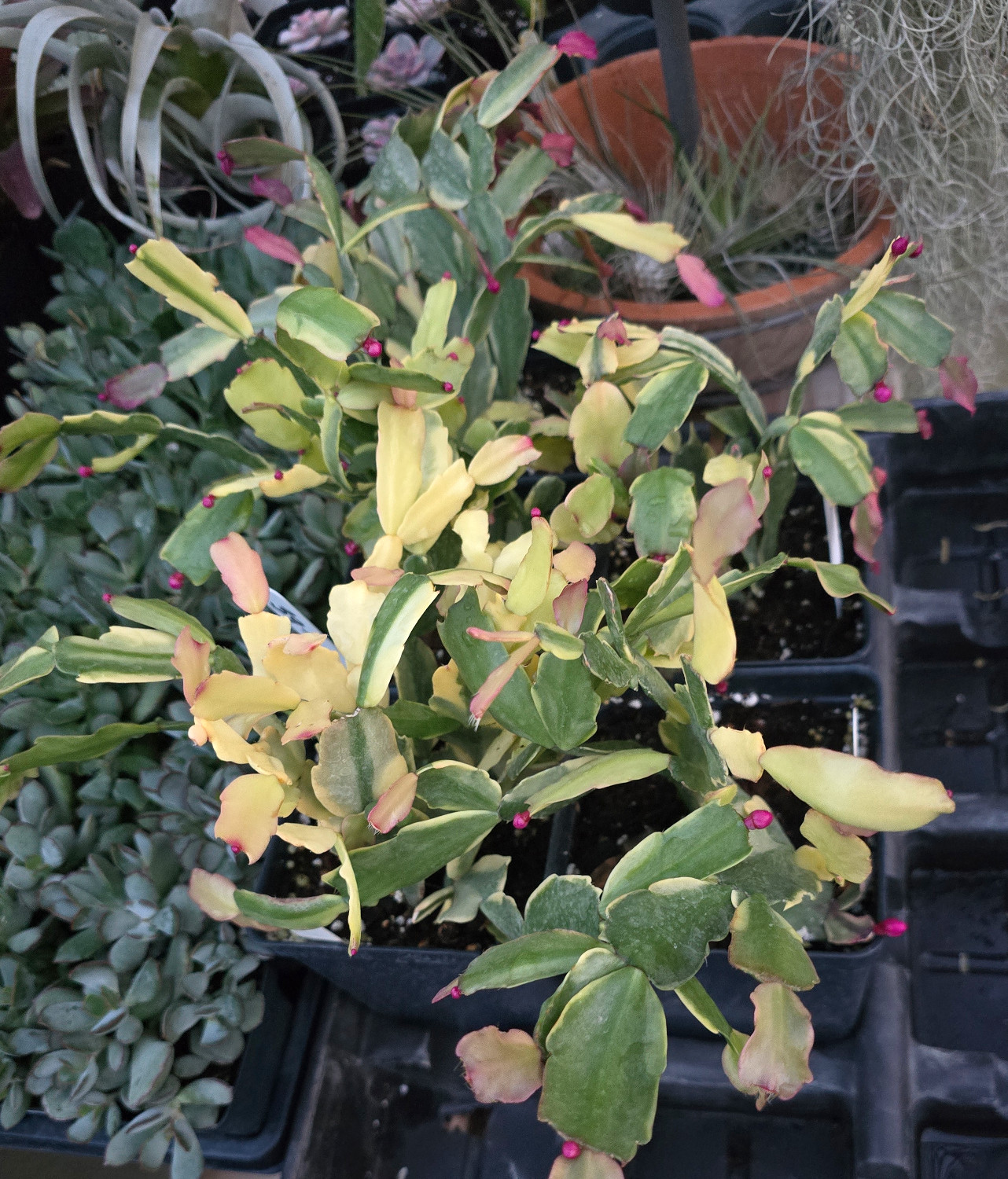
- Light: Place in bright, indirect light, such as an east-facing window. Intense direct afternoon sun can scorch the segments and turn them reddish, while overly dim spots reduce blooming.
- Temperature: Keep between 65°F and 85°F during active spring and summer growth.
- Cool Fall Rest: For Thanksgiving and Christmas cacti, provide cooler temperatures of 50°F to 60°F for 6–8 weeks starting in mid-October to trigger flower buds (avoid temperatures below 50°F). (Note: Easter cacti require a similar cool rest in late winter to set spring buds.)
Blooming: The Secret is Darkness
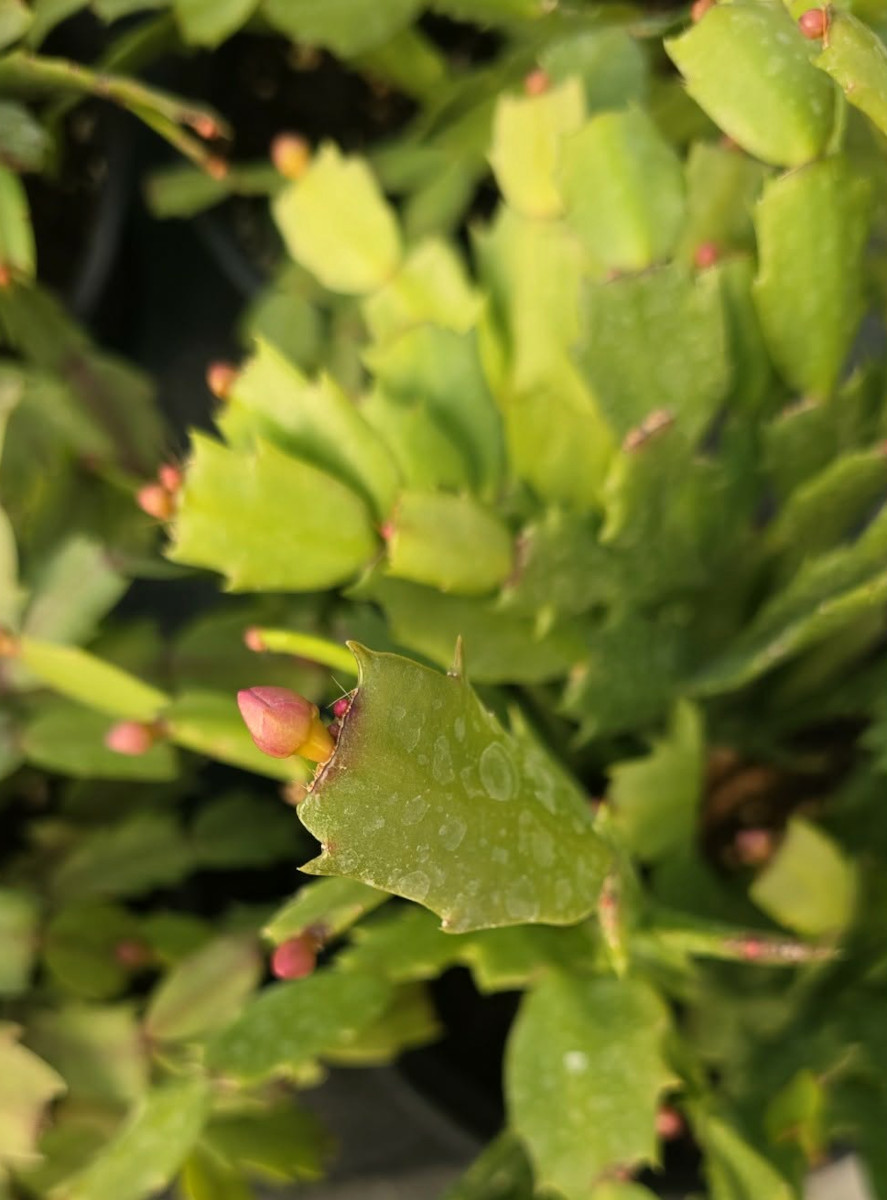
In addition to cool temperatures, holiday cacti rely on day length to set flower buds:
- Cool Temperatures: Maintain 50°F–60°F during the bud-setting window.
- Uninterrupted Darkness: Provide 12–14 hours of total darkness each night for 6–8 weeks until buds form. A dark spare room, closet, or breathable cardboard box works well – even brief light from a lamp or streetlight can delay budding.
Once buds appear, return the plant to a bright spot at normal room temperature (around 70°F) and avoid rotating or moving the pot, as sudden changes can cause bud drop.
We have heard stories of people who put their cactus in a dark closet or basement after Christmas, only to be shocked to find it dead when they pulled it out of the closet to enjoy the following Christmas! Please do not leave your Holiday Cactus in a dark location for days (or more!) at a time!
Soil, Repotting, Fertilizing, and Pruning
Pruning: About a month after blooming finishes, you can twist or snip off a few segments at the joints to encourage fuller branching and more blooms next season. The removed segments root easily in moist potting mix to share with friends.
Repotting: Holiday cacti actually bloom best when slightly rootbound, so they do not need repotted often. Repot in the spring after flowering finishes, stepping up just one pot size into a container with drainage holes.
Soil: Use a loose, fast-draining mix – standard potting soil amended with perlite or fine orchid bark works well.
Fertilizing: Feed monthly from April through September with a balanced water-soluble fertilizer (such as 20-20-20) diluted to half strength. Or apply a slow release fertilizer according to the instructions. Stop fertilizing during the bud-setting and blooming periods.
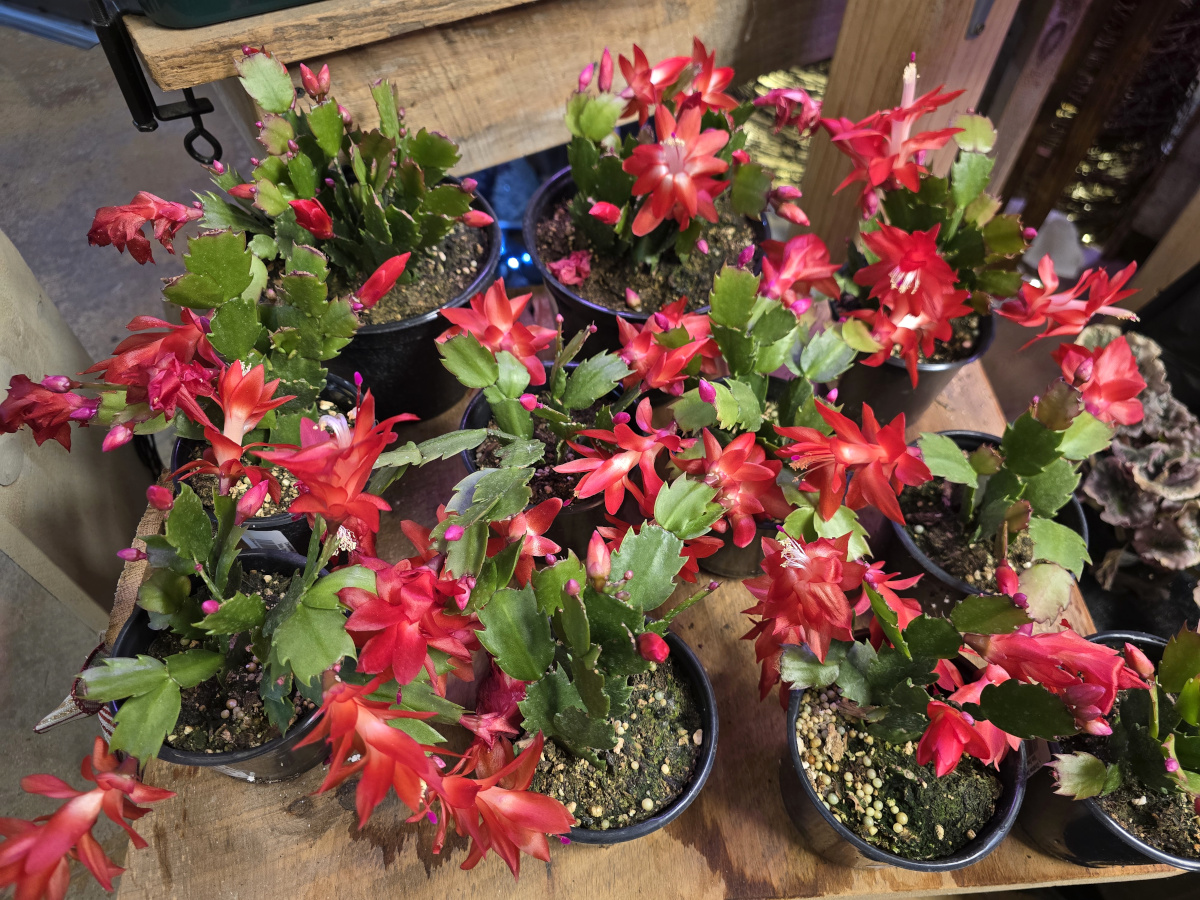
With just a little care, a holiday cactus can easily thrive for decades – often growing into a cherished family heirloom passed down from one generation to the next, or shared through rooted cuttings with friends and neighbors. Whether you are tending a sprawling plant that has graced your family’s windowsill for years or starting a new tradition with one grown right here in our greenhouse at In The Country Garden & Gifts, these resilient bloomers bring bright color to the coldest months of the year.
Leave a Reply